
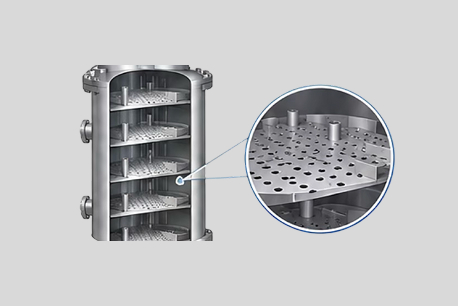
Distillation column engineering assesses vapor–liquid loads, separation targets, tray or packing configurations, and hydraulic limitations to develop a design that balances capacity, efficiency, operating flexibility, and cost.
Request Product Details / QuoteNew distillation columns, fractionators, and existing-column performance reviews.
Columns may experience capacity limitations, high pressure drop, or inadequate product separation.
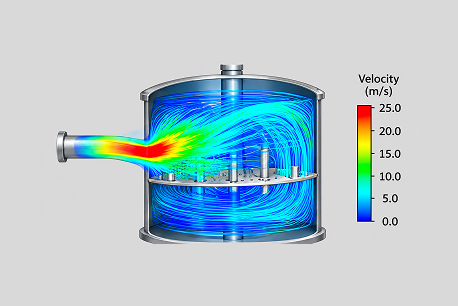
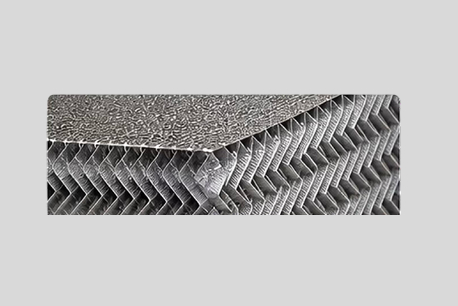
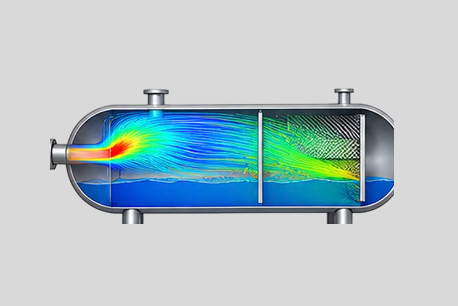
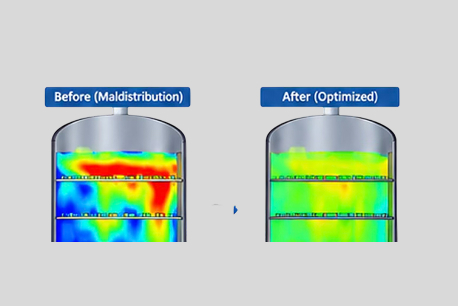
Our engineering team compares feasible column configurations and internal arrangements to resolve separation and hydraulic performance limitations. The evaluation considers vapor and liquid flow rates, operating pressure and temperature, feed composition, separation requirements, column dimensions, and allowable pressure drop. Using process and hydraulic calculations, we assess various column configurations and internal designs to optimize vapor–liquid contact, separation efficiency, and operating capacity. Depending on the application, we evaluate sieve trays, valve trays, bubble-cap trays, structured packing, and random packing to determine the most appropriate solution. For tray columns, the assessment includes tray spacing, active area, downcomer capacity, liquid residence time, weeping, entrainment, flooding, and pressure drop. For new installations, our engineering approach supports the selection of appropriate column dimensions and internals to achieve the required separation objectives. For existing columns, we review operating limitations and identify opportunities for debottlenecking, internals replacement, and capacity enhancement. By comparing technically feasible design alternatives against the customer's operating requirements, we recommend an optimized solution that balances separation performance, hydraulic efficiency, operational flexibility, mechanical feasibility, and overall project cost.
Process simulation and hydraulic calculations should be reconciled with operating data, physical dimensions, and mechanical limitations.
Take the first step towards enhancing your engineering solutions by reaching out to us today. At Spectra Solutions LLC, we're dedicated to providing you with innovative and customized options tailored to your specific needs.
Contact now!